

Djunaidi Baharudin – Managing Director ISORES
As 2025 enters its final Tagar#quarter, organizations are starting to prepare Tagar#strategies_for_2026. The process of developing a strategy, including how it will be managed, remains a Tagar#key_topic of discussion. The Tagar#exceptional_growth of many Tagar#startups has prompted some Tagar#organizations to consider adopting Tagar#OKRs (Tagar#Objectives_and_Key_Results). However, many organizations continue to rely on the Tagar#Balanced_Scorecard (Tagar#BSC) approach with its Tagar#Strategy_Objective, Tagar#KPI and Tagar#Strategy_Initiatives, as a Tagar#strategic_management_system.
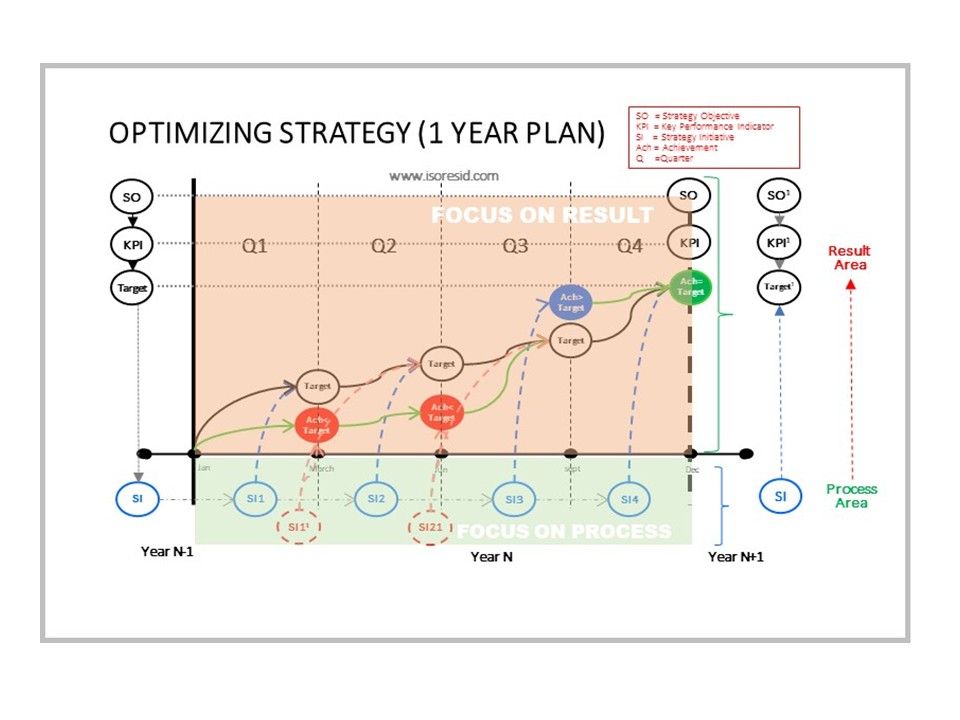
When selecting a strategic management system, it is essential to understand the # organization’s_quadrant (Tagar#model_management by Tagar#Prof Shaz Ansari) and its nature. Additionally, it is essential to understand the characteristics of each Tagar#performance_management_system. Balanced Scorecard-based KPIs are designed with the underlying philosophy of achieving organizational goals. Regardless of the methods used to reach these goals, the ultimate Tagar#outcome is what gets Tagar#evaluated. In contrast, the philosophy behind OKR-based KPIs emphasizes that any target or objective will not be met unless the Tagar#process is carefully Tagar#managed and Tagar#monitored. Setting overly Tagar#ambitious_targets without a clear process to achieve them will lead nowhere. In simpler terms, the Balanced Scorecard emphasizes Tagar#results, while Tagar#OKRs Tagar#prioritize the processes needed to achieve those results.
What do you think? and which one will you choose?

Leave a Reply